
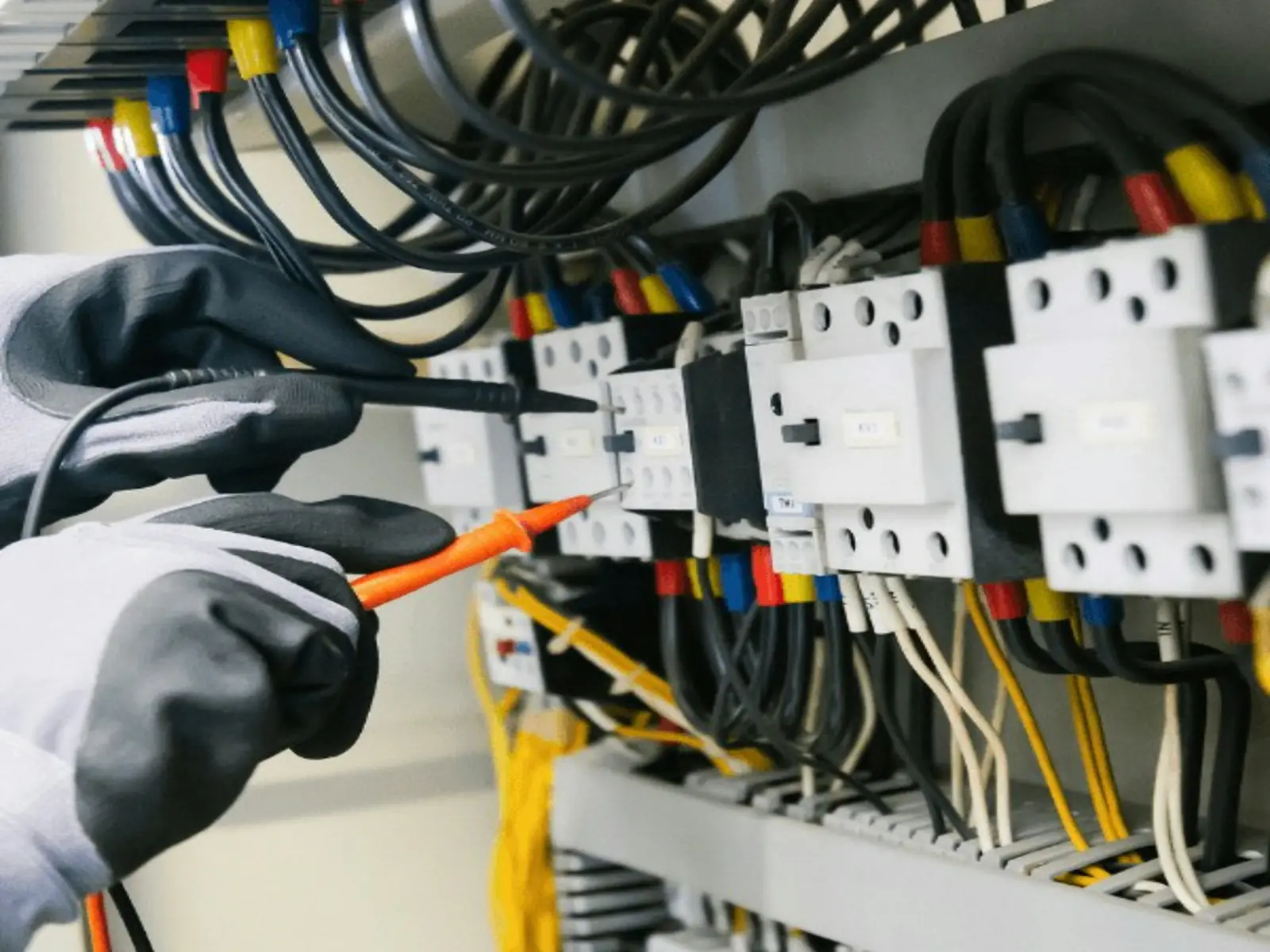



An EICR, short for Electrical Installation Condition Report, is a documented inspection and test of the fixed wiring in a property, carried out against the current edition of BS 7671. It tells you in writing whether the electrical installation is safe to keep using, what needs putting right, and how urgently. People often call it an electrical safety certificate, a landlord electrical certificate or simply an EICR certificate. They all mean the same report.
Westgate Property Solutions carries out EICR testing across Mansfield, wider Nottinghamshire and Derbyshire for landlords, homeowners and commercial premises. Every inspection is done by our own Level 3 qualified electricians. We don't sub-contract. Prices are fixed and include VAT and the report, so the price we quote is the price you pay.
What does EICR mean?
EICR stands for Electrical Installation Condition Report. It is a periodic inspection of the fixed electrical system in a building. The inspector carries out a visual examination and a series of tests with the power on and off, records the results circuit by circuit, and gives the installation an overall outcome: satisfactory or unsatisfactory.
It is not the same as an Electrical Installation Certificate (EIC). An EIC is issued when new electrical work is completed. An EICR assesses an installation that has already been in use for some time. It is also different from Portable Appliance Testing (PAT), which covers plug-in appliances rather than the wiring behind them. In commercial buildings the same inspection is often called fixed wire testing.
The report records any damage, deterioration, defects, dangerous conditions and departures from current standards, along with the test results behind each finding. That written evidence is what insurers, letting agents and local councils look for. It also shows you are meeting the duty in the Electricity at Work Regulations 1989 to keep electrical systems safe.
What counts as the electrical installation?
The installation is everything fixed and permanently connected:
- the consumer unit (still often called the fuse box), circuit breakers and RCDs
- the wiring and cables running through walls, floors and lofts
- sockets, switches and light fittings
- extractor fans, cookers, electric showers and immersion heaters
- outside lights and garden or outbuilding supplies
- the earthing and bonding that keep the whole system safe
Anything with a plug, such as kettles, televisions or power tools, is outside the scope of an EICR. Those are covered by appliance testing instead.
What does an EICR test involve?
The inspection combines a detailed visual check with instrument testing. In practice that means:
- isolating the supply so circuits can be tested safely one at a time
- removing the consumer unit cover and accessory faceplates to check connections, cable sizes, terminations and signs of overheating
- insulation resistance testing to find breakdown or damp in the wiring
- continuity testing of protective conductors, earthing, and main bonding to gas and water pipes
- earth fault loop impedance testing and prospective fault current measurement
- RCD operation and trip-time testing
- polarity checks throughout the installation
- checking that the installation suits the property, the load and how it is used
Every circuit is tested, not a sample, and the results go into the schedules that form part of the report. Most houses and flats take a few hours. The power is off for parts of the test, so we agree timings with you or your tenants in advance. You receive the full written EICR by email, along with a fixed-price quote for any remedial work it identifies. See what an electrical safety check involves for a step-by-step guide.
EICR codes: C1, C2, C3 and FI
Each observation is coded so you can see at a glance what matters most:
| Code | Meaning | Outcome |
|---|---|---|
| C1 | Danger present: risk of injury now. We make it safe before we leave. | Unsatisfactory |
| C2 | Potentially dangerous: needs fixing to bring the installation up to standard. | Unsatisfactory |
| C3 | Improvement recommended: not dangerous, but worth doing. | Does not fail |
| FI | Further investigation needed before the installation can be signed off. | Unsatisfactory |
A report is unsatisfactory if it contains any C1, C2 or FI item. Our guide to EICR codes has examples of each.
Who needs an EICR, and how often?
| Property | How often | Legal requirement? |
|---|---|---|
| Private rented home (England) | At least every 5 years | Yes. See landlord EICR |
| HMO | At least every 5 years | Yes. See HMO EICR |
| Owner-occupied home | Every 10 years, and when you move in | Recommended. See homeowner EICR |
| Shops, offices, commercial units | Typically every 5 years | Expected under the Electricity at Work Regulations. See commercial EICR |
The inspector can recommend a shorter interval where the condition or use of the installation justifies it. The next inspection date is printed on the report. See how long an EICR is valid for.
Does a landlord have to provide an EICR?
Yes. Under the Electrical Safety Standards in the Private Rented Sector (England) Regulations 2020, landlords must have the electrical installation inspected and tested by a qualified and competent person at least every five years. They must give a copy of the report to existing tenants within 28 days, to new tenants before they move in, and to the local council within seven days if asked. Any C1, C2 or FI items must be fixed within 28 days, or sooner if the report says so. Councils can impose fines of up to £30,000.
Do homeowners need an EICR?
There is no legal duty for owner-occupiers, but an inspection every ten years is recommended, as well as when you buy an older home. See do I need an EICR to buy a house?.
How many circuits do I have?
Open the consumer unit and count the breakers. Each circuit breaker or fuse protects one circuit: upstairs lights, downstairs lights, sockets, cooker, shower, immersion heater, garage supply, and so on. Don't count the main switch or an RCD, and don't count blank spaces. If you have a second board in a garage or outbuilding, add its breakers to the total.
That number decides the price band: up to 8 circuits is £149, up to 12 is £179 and up to 18 is £229. If you are not sure, send us a photo of the board and we will tell you before you book. See how much an EICR costs for details.
If your EICR comes back unsatisfactory
We give you a fixed-price quote for the remedial work needed to make the installation satisfactory. That might be a new consumer unit, replacing damaged accessories, fixing earthing and bonding, or tracing a fault flagged for further investigation. You don't have to use us. Once the work is done, we issue written confirmation so you can show the property is now satisfactory. For landlords working to the 28-day deadline, getting the quote with the report saves a round of chasing.
Can any electrician do an EICR?
No. The inspector must be competent to inspect and test, not just to install. Look for an inspection and testing qualification such as City & Guilds 2391, up-to-date knowledge of BS 7671, calibrated test instruments, and adequate insurance. The rules on who can sign an EICR are getting stricter. See the October 2026 changes and can any electrician do an EICR?.
Our EICRs are carried out by Level 3 qualified in-house electricians. We are Part P notified and carry £15m public liability insurance. Because we never sub-contract, the person who inspects your property is the person who signs the report.
How to check a property has a valid EICR
Ask for a copy of the report and check five things:
- the date it was issued and the next inspection date
- the address, and how much of the installation it covers
- the overall outcome
- the inspector's name, signature and organisation
- that the schedules of inspection and test results are attached
If any C1, C2 or FI items were recorded, ask for the written confirmation that the remedial work was done. See our full guide to checking a property has a valid EICR.
Areas we cover
We are based in Mansfield Woodhouse and test properties across Nottinghamshire and into Derbyshire, including Mansfield, Nottingham, Sutton-in-Ashfield, Kirkby-in-Ashfield, Hucknall, Worksop, Newark, Chesterfield and Derby. See all areas we cover.